An Exhibition for Lindsay
Milan · MMXXVI
Cat. no.
I–XVI

Composure
Conscience

A walking exhibition through a city that rebuilds without forgetting. Books, squares, scarred rooms, paintings that will not let go.

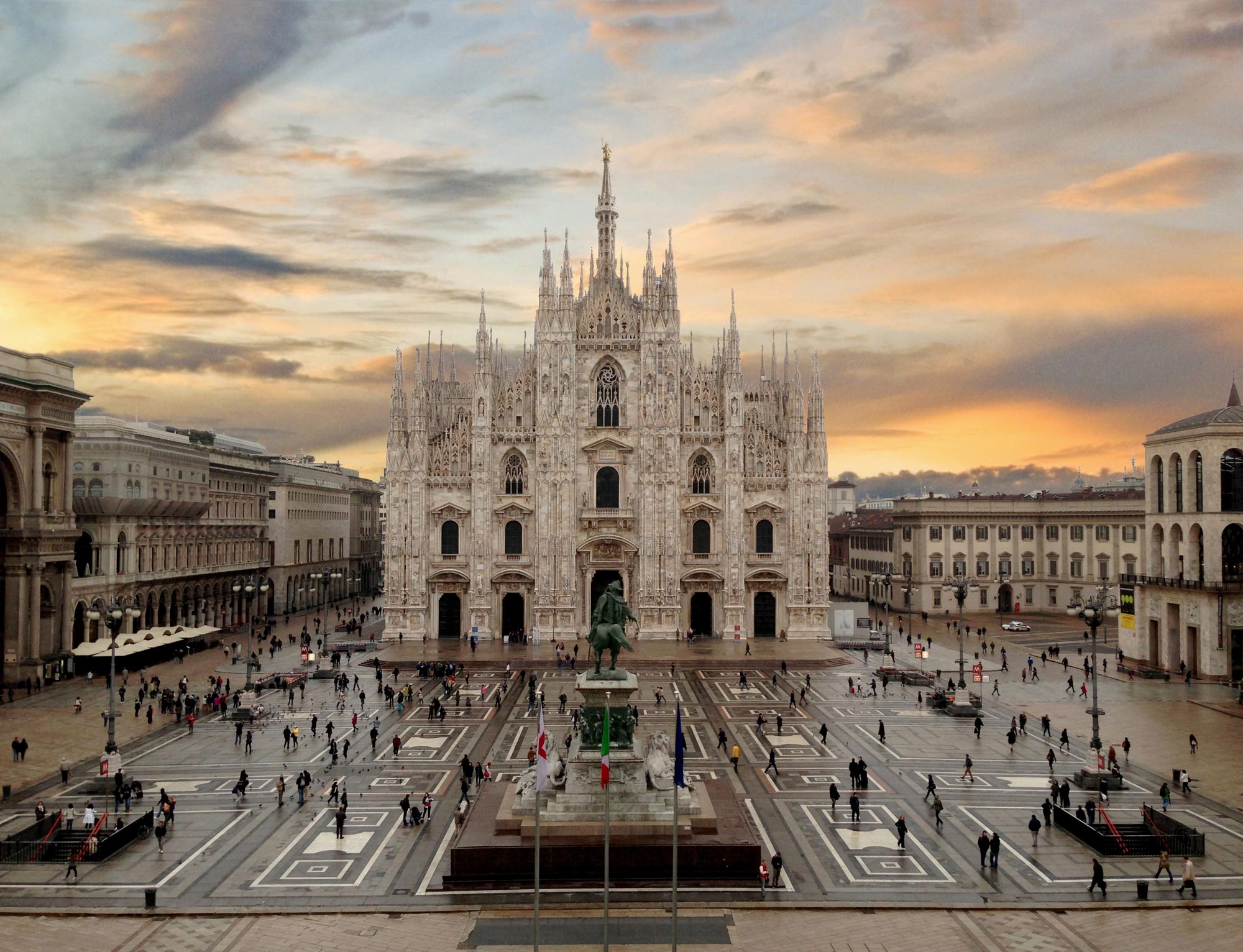
Duomo di Milano
DUOMO · MILAN
Curated route
2026 · Walking copy
Rooms I – VI · Annex
Allow one or two days
I
The Book
Cat. 1–2 · Manzoni, 1827 & 1840

The plague of 1630 killed roughly half of Milan. Two centuries later, Manzoni made the event into the national novel. He also wrote a sharper, shorter book about the trial of the two men blamed for spreading it.

Italian schools still teach both. This is how Milanese culture learned to read itself.

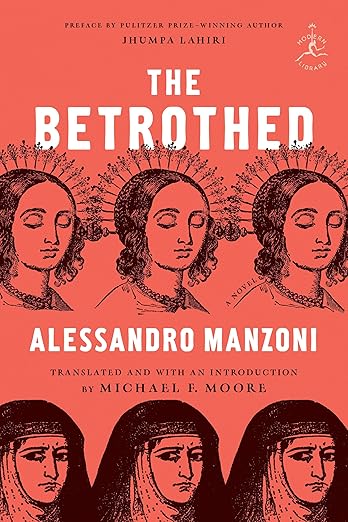
The Betrothed, Michael F. Moore translation, Random House 2024
The Betrothed · Moore trans. 2024
Cat. no. 1

Alessandro Manzoni
The Betrothed

First published 1827. The Michael F. Moore translation, Random House, 2024. Find a copy at Libreria Bocca, founded 1775, in the Galleria Vittorio Emanuele II.

A novel of Spanish-ruled Milan in the years around the plague of 1630. Bread riots, faith, hierarchy, rumor, the conduct of officials under pressure.

Italians read it as the great account of how a society behaves when its institutions fail at once. Two centuries on, it is still the book the city reaches for when it wants to think clearly about itself.

Buy first. Carry through Rooms II and III.
Libreria Bocca · Galleria
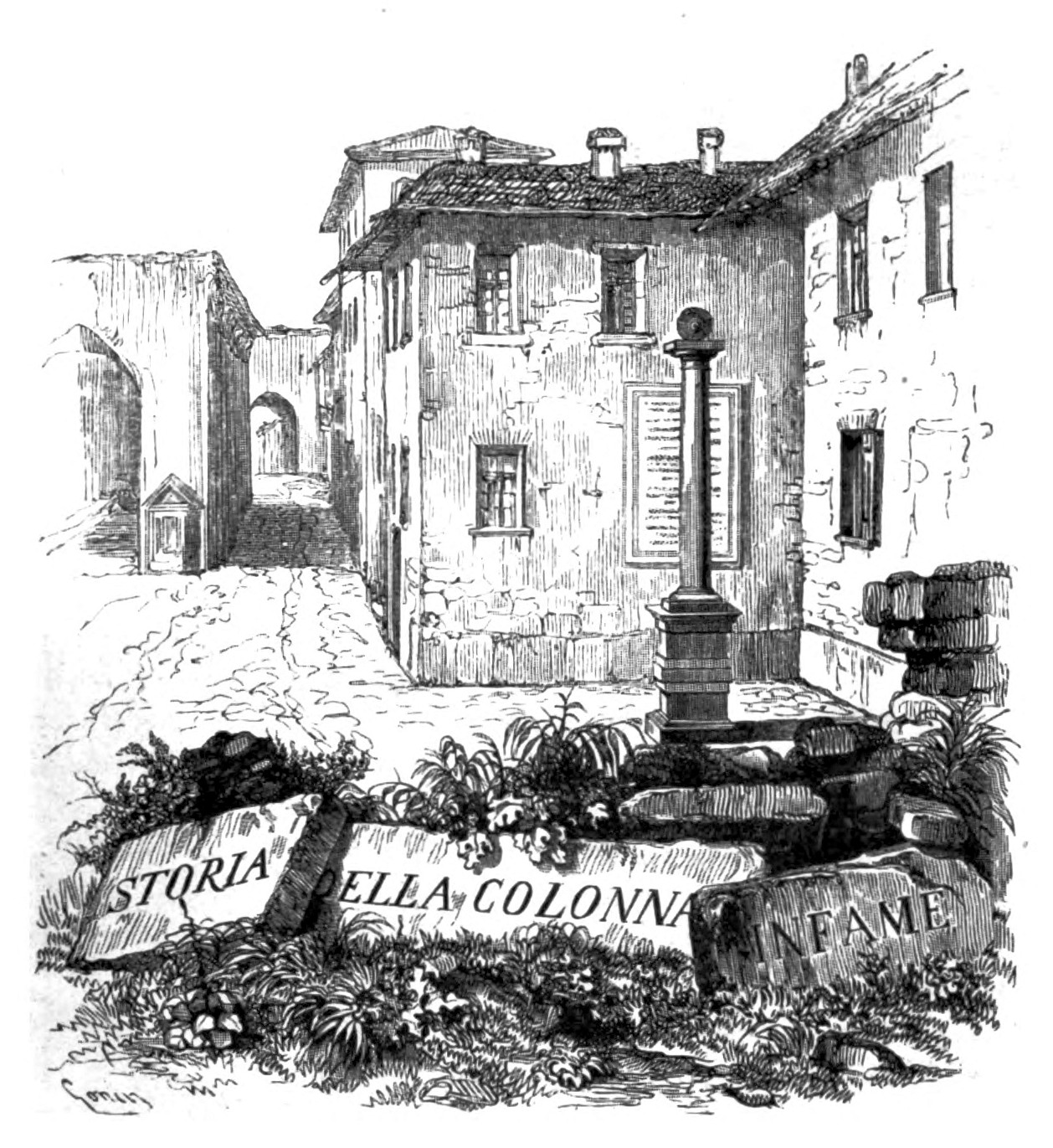
Engraving from I Promessi Sposi
Storia della colonna infame · 1840
Cat. no. 2

Alessandro Manzoni
History of the Column of Infamy

Storia della colonna infame, 1840. Available at Libreria Hoepli, Via Hoepli 5. Six floors, opened 1870.

During the 1630 plague, Milanese authorities decided someone must be spreading the disease on purpose. Two men were accused of smearing poisoned ointment on the walls. Both were tortured into confession and executed. The house of one was demolished and a monument of disgrace, the Colonna Infame, raised on the site.

Manzoni returned to the case in 1840 and wrote a furious short book about how rumor, courts, and fear had together produced the verdict.

The foundational Milanese text on what public trust looks like when it fails.

Read after Cat. 1. Best read alone.
Libreria Hoepli · Via Hoepli 5
II
The Walk
Cat. 3–4 · Porta Venezia · Via Morone

The plague city has mostly been built over. What survives is a chapel, a writer's house, and a handful of street names that still trace the old enclosure.

Walk slowly. The map is the work.

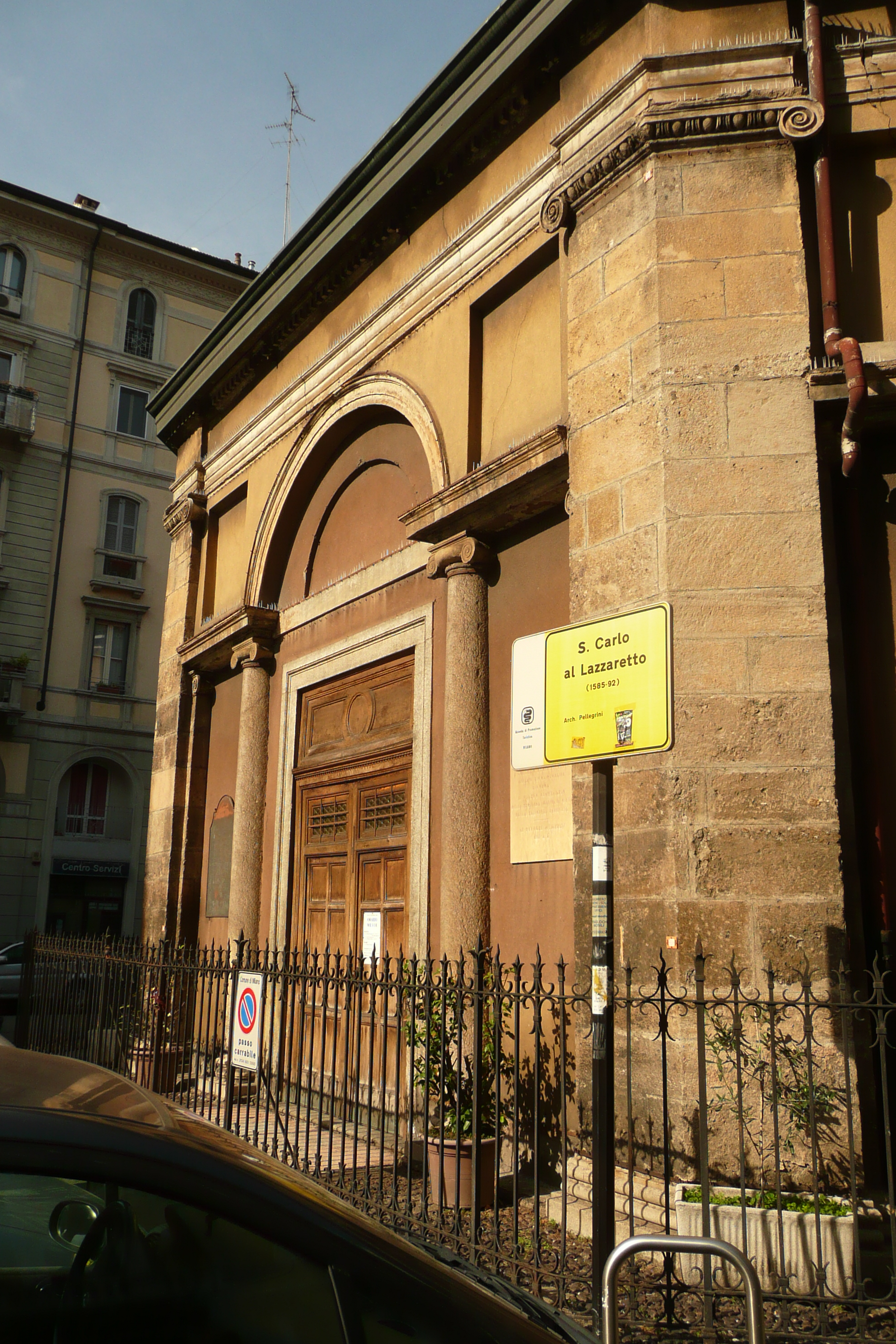
San Carlo al Lazzaretto
Cat. no. 3

San Carlo al Lazzaretto
and its quiet neighborhood

Largo Bellintani, Porta Venezia. The surviving chapel of a vast quarantine complex now long dissolved into ordinary streets.

In 1630 the Lazzaretto held tens of thousands of the sick on a quarantine field outside the walls. San Carlo is its chapel, still standing on a small square ringed by shops and apartments.

The old enclosure was demolished in the nineteenth century. Its outline survives in the streets that took the names of what was there. Via San Gregorio. Via Lazzaretto. Viale Vittorio Veneto. Corso Buenos Aires.

One of the most ordinary stretches of the city, laid over one of its heaviest. Bring Manzoni. Read a page in a cafe on Corso Buenos Aires.

Allow 30 minutes.
San Carlo al Lazzaretto · Porta Venezia
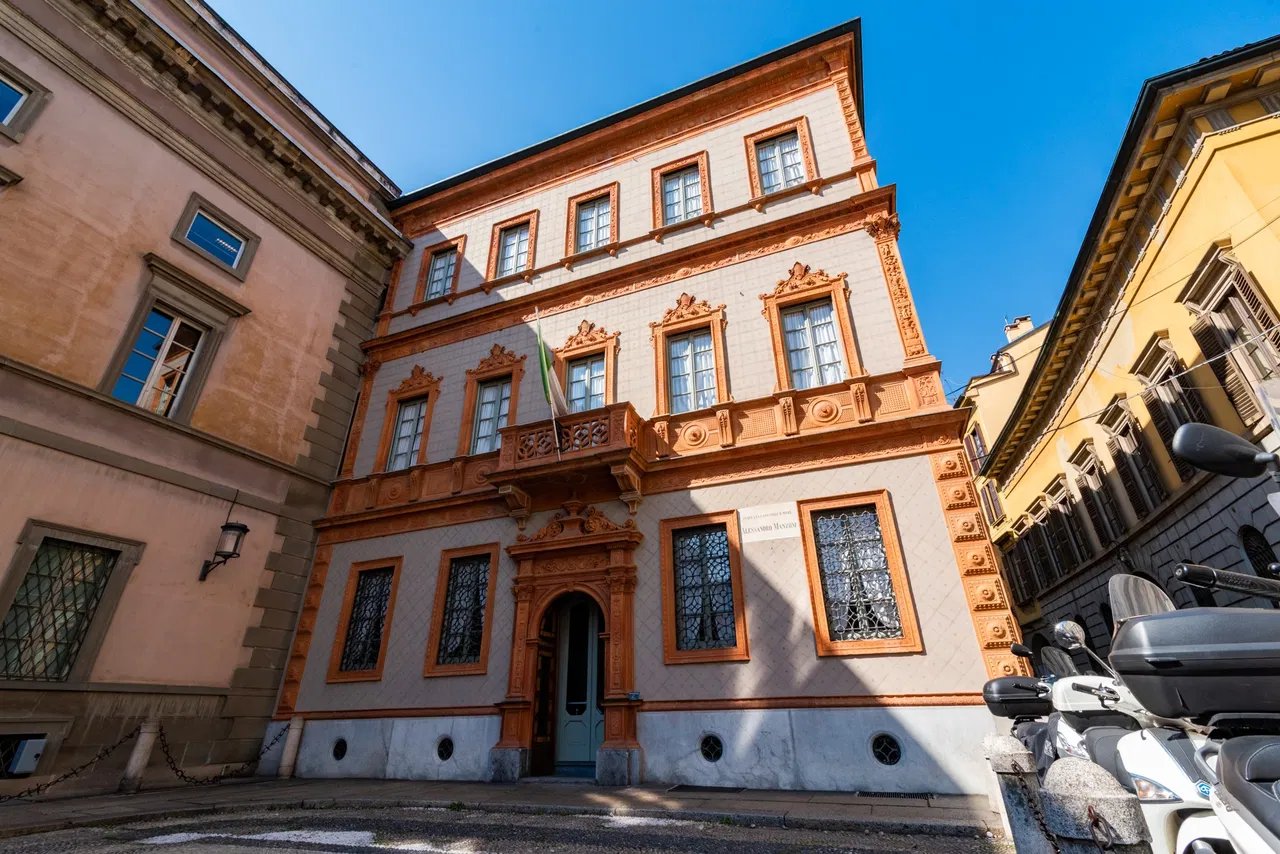
Casa Manzoni, Via Morone, Milan
Casa Manzoni · Via Morone
Cat. no. 4

Casa Manzoni

Via Gerolamo Morone 1, one block from La Scala.

Manzoni lived here for almost sixty years and revised The Betrothed in the upstairs study. Verdi came to pay his respects on his death, and afterwards composed the Requiem in his memory.

A small museum on a small street. A city of three million still treats one writer's desk as a civic possession. The visit answers the question of why.

Allow an hour.
Casa Manzoni · Via Morone 1
III
The Square
Cat. 5 · Piazza Fontana, beside the Duomo

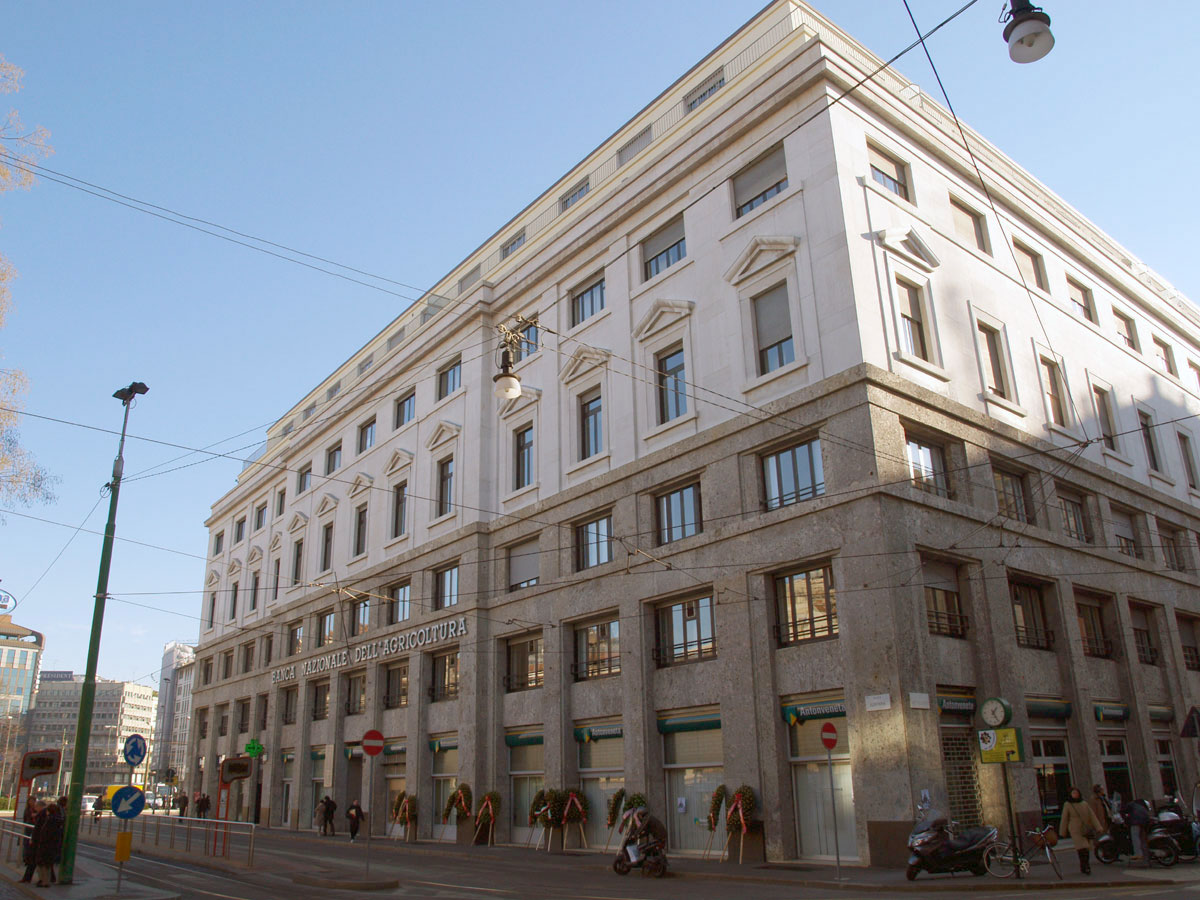
On 12 December 1969 a bomb in the Banca Nazionale dell'Agricoltura killed seventeen people steps from the Duomo. It opened the decade Italians call the anni di piombo, the years of lead.

The investigation collapsed across a half-century of trials. The square sits unannounced beside the cathedral.

Piazza Fontana, Banca Nazionale dell'Agricoltura
Piazza Fontana
Cat. no. 5

Piazza Fontana

12 December 1969. Seventeen dead, eighty-eight wounded.

Stand here first. A flower seller, a fountain, the bank where the bomb went off, the side of the archbishop's palace.

Three days after the explosion, Giuseppe Pinelli, an anarchist railway worker, fell to his death from a window on the fourth floor of police headquarters during questioning. The official account was suicide. No criminal trial ever produced a convincing one.

In 2025 Milan broke ground on Non dimenticarmi, a memorial of 137 steles fitted with wind chimes for the dead of eight Italian terror attacks. The square has not finished speaking.

Piazza Fontana · beside the Duomo
Allow time before walking on. Cat. 6 is two minutes away.
IV
The Museum
Cat. 6–9 · Museo del Novecento, Piazza Duomo 8

Two minutes from Piazza Fontana, the Museo del Novecento holds Milan's twentieth century. The workers' march, the brawl in the Galleria, the cut canvas, the political collage the city kept in storage for almost forty years.

All of it inside four rooms of the Duomo.

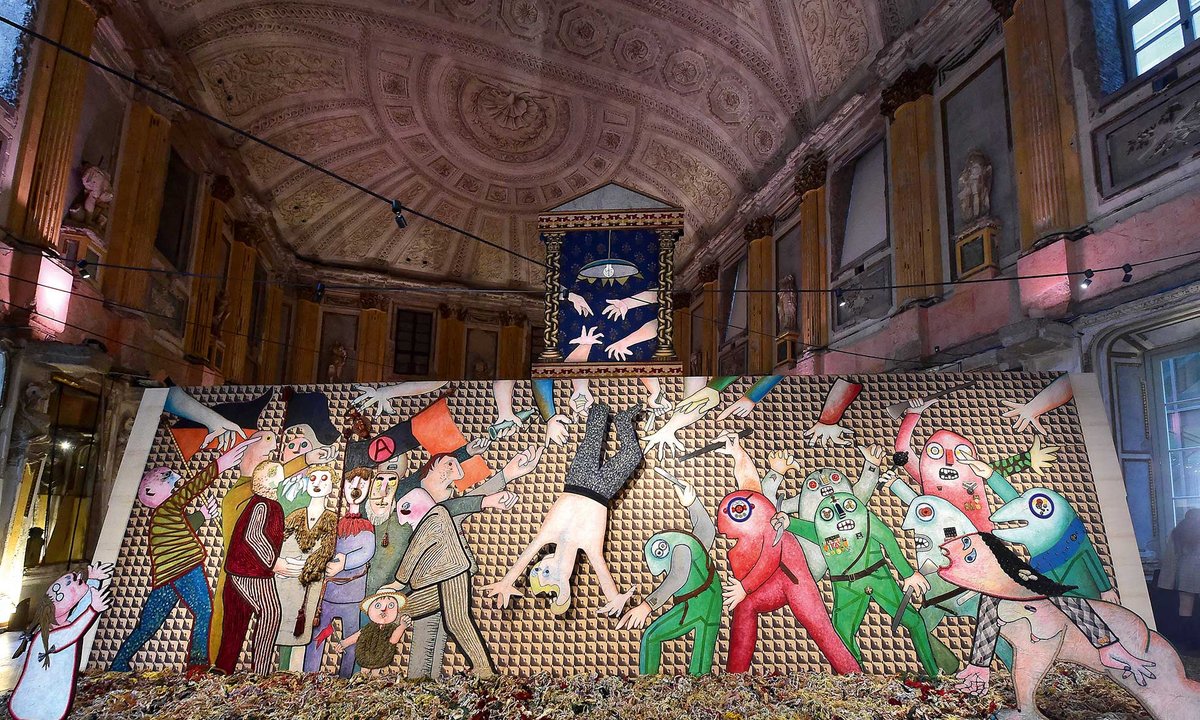
Enrico Baj, I funerali dell'anarchico Pinelli, 1972
Baj · I funerali dell'anarchico Pinelli · 1972
Cat. no. 6

Enrico Baj
The Funeral of the Anarchist Pinelli

1972. Mixed media collage on canvas, six meters wide. Museo del Novecento.

Three years after Pinelli fell from the police window, Enrico Baj built this painting for him. Cardboard officers, gas masks, ribbons, medals, a body in collage.

It was scheduled to open at the Palazzo Reale on 17 May 1972. Hours before the vernissage, Luigi Calabresi, the police commissioner responsible for the Pinelli interrogation, was murdered in front of his home. The opening was cancelled. The painting went into storage and stayed there for almost forty years.

It hangs now in the museum on the Duomo. The city put the unresolved argument in its own front room.

Visit after Cat. 5. The order matters.
Museo del Novecento · Piazza Duomo 8
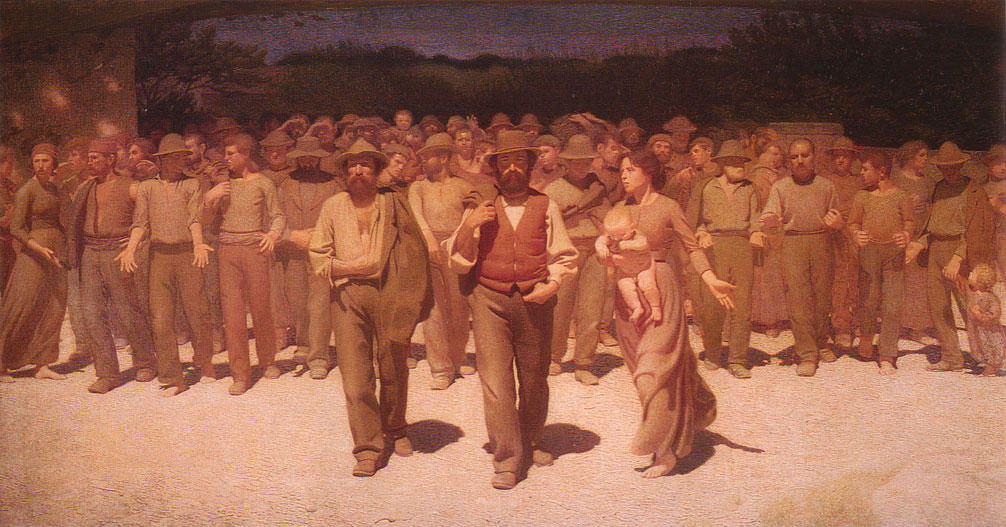
Il Quarto Stato, Pellizza da Volpedo
Pellizza da Volpedo · Il Quarto Stato
Cat. no. 7

Giuseppe Pellizza da Volpedo
Il Quarto Stato

1898–1901. Oil on canvas, 2.83 × 5.50 m. Museo del Novecento.

Pellizza took ten years to finish it. Three figures lead the workers of a Piedmontese village forward in low Lombard light. A man in shirtsleeves, an older man with a stick, a woman carrying a child.

Rejected by the Italian salons. Bought late and quietly by the city of Milan in 1920. It is now the canonical image of the Italian labor movement.

Two paintings, a few rooms apart, of the civic body under stress. One marching forward. One being carried out.

Look at it with Baj still in your eye.
Museo del Novecento · Piazza Duomo 8
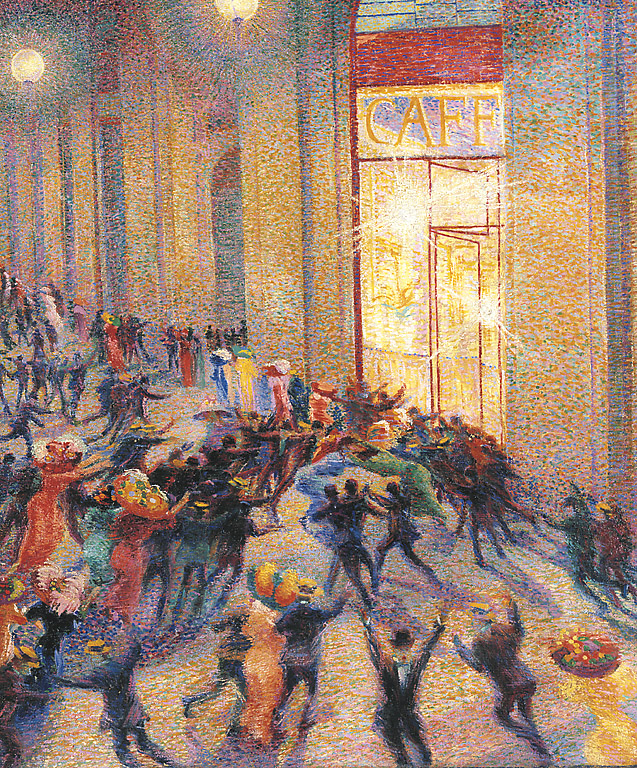
Umberto Boccioni, Rissa in galleria
Boccioni · Rissa in galleria
Cat. no. 8

Umberto Boccioni
Rissa in galleria

1910. Oil on canvas. Pinacoteca di Brera collection, on long-term loan to Museo del Novecento.

A brawl outside a cafe in the Galleria Vittorio Emanuele. Two women in the middle. Hats fly. Gold light spills from the doorway.

Painted in 1910, the year of the Futurist Manifesto. Boccioni was twenty-eight and had moved to Milan because Milan was where the future was being made.

A small portrait of the city that produced everything else in this room. Electric, dressed for the evening, willing to throw a punch.

A few rooms from Baj. A different temperature, same city.
Museo del Novecento · Piazza Duomo 8
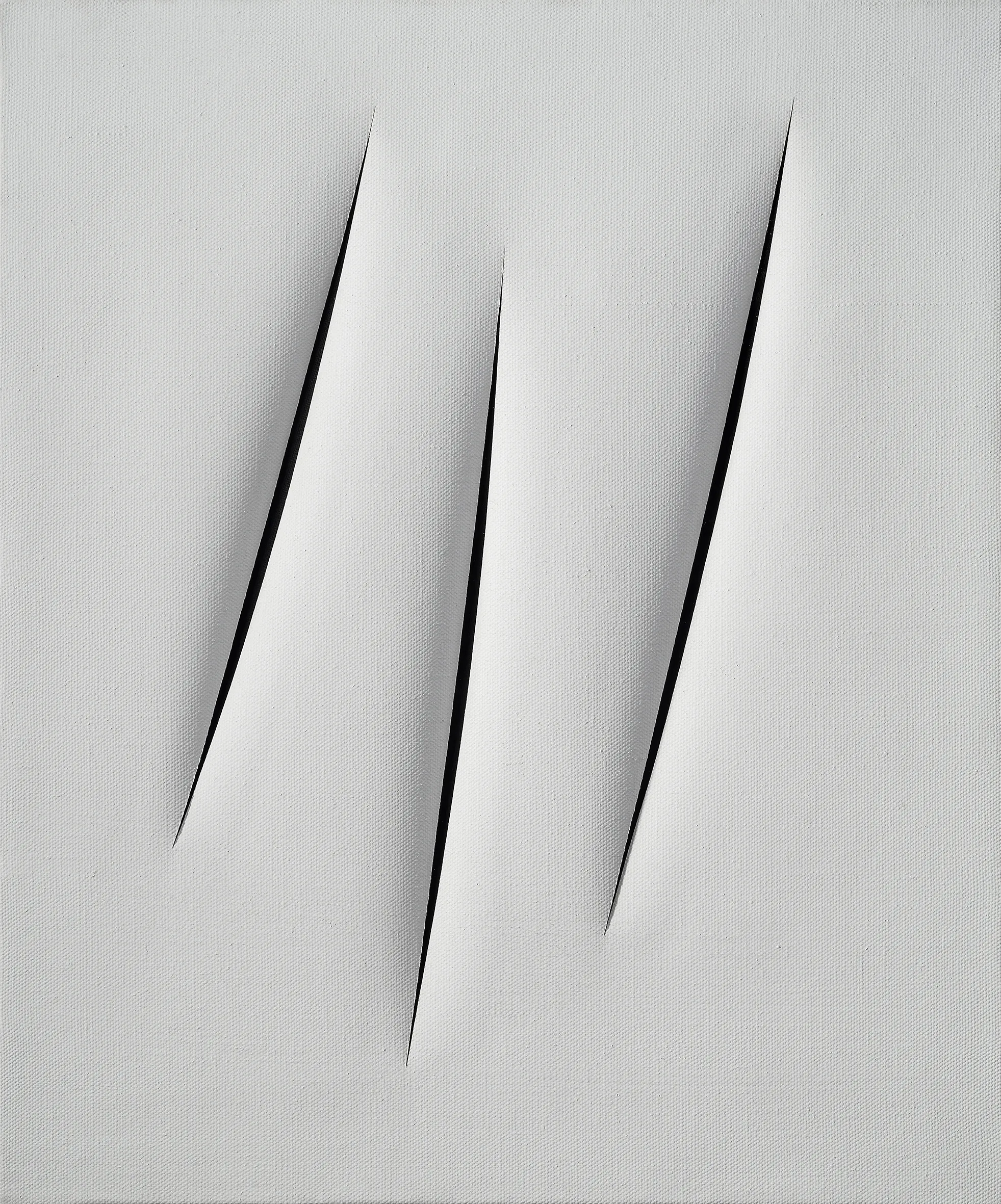
Lucio Fontana, Concetto Spaziale, Attese, 1968
Fontana · Concetto Spaziale, Attese · 1968
Cat. no. 9

Lucio Fontana
Concetto Spaziale, Attese

From the 1958–1968 series. Oil and slash on canvas. Museo del Novecento.

Fontana ran a blade across a monochrome canvas in 1958 and continued the gesture for the rest of his life. He had survived the war and the destruction of his Milan studio by Allied bombing.

The Italian title of the series is Attese, expectations. The cut is the form.

A small painting in the same museum that states the thesis of this exhibition plainly. Repair does not require erasure.

Read with Cat. 10 in mind.
Museo del Novecento · Piazza Duomo 8
V
The Hall
Cat. 10–11 · Palazzo Reale

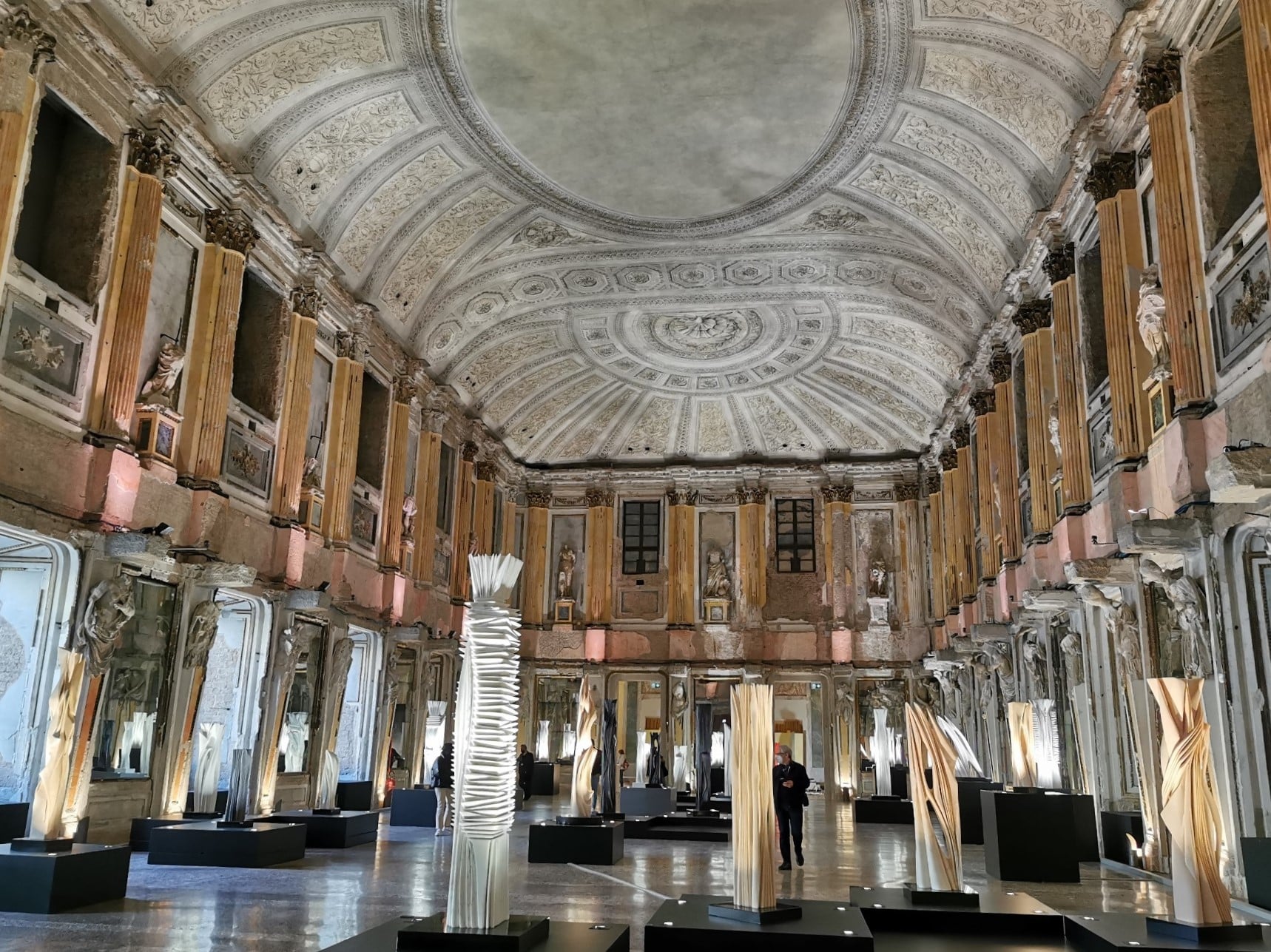
On the night of 15 August 1943, American and British bombs fell on the centre of Milan. The roof of the Palazzo Reale collapsed into its great ballroom. The frescoes burned. The caryatids stood.

The city kept the room that way on purpose.

Sala delle Cariatidi, Palazzo Reale, Milan
Sala delle Cariatidi
Cat. no. 10

Sala delle Cariatidi

Palazzo Reale. Bombed in August 1943.

The throne room of the Habsburg viceroys, then the ballroom of the kings of Italy. After the bombing the city declined to restore the painted ceiling or the wall surfaces. The plaster is still raw. The black is the fire.

In 1953, Picasso sent Guernica to Milan and the city installed it here, in this room, on purpose. He would have understood the choice.

The single clearest argument in Milan for what civic memory looks like when it is taken seriously.

Palazzo Reale · Piazza Duomo 12
A room that refuses to forget what it has been.
Cat. no. 11

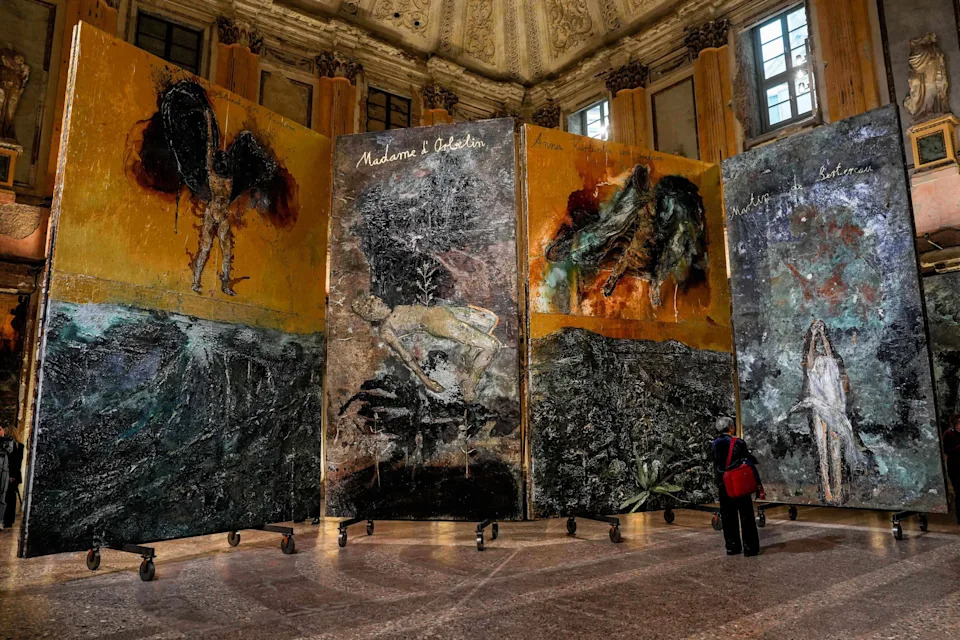
Anselm Kiefer
The Women Alchemists

Sala delle Cariatidi, Palazzo Reale. 7 February – 27 September 2026.

Kiefer paints with lead, ash, gold leaf and burned straw. He has spent his whole career on the question of what survives a fire.

The works for 2026 were made for this exact room. The painter and the walls are doing the same work.

If the dates align, the one item on the itinerary I would not skip.

Check ticketing in advance.
Palazzo Reale · Piazza Duomo 12
Anselm Kiefer, The Women Alchemists, Sala delle Cariatidi, 2026
Kiefer · The Women Alchemists · 2026
VI
The Reopening
Cat. 12 · Teatro alla Scala

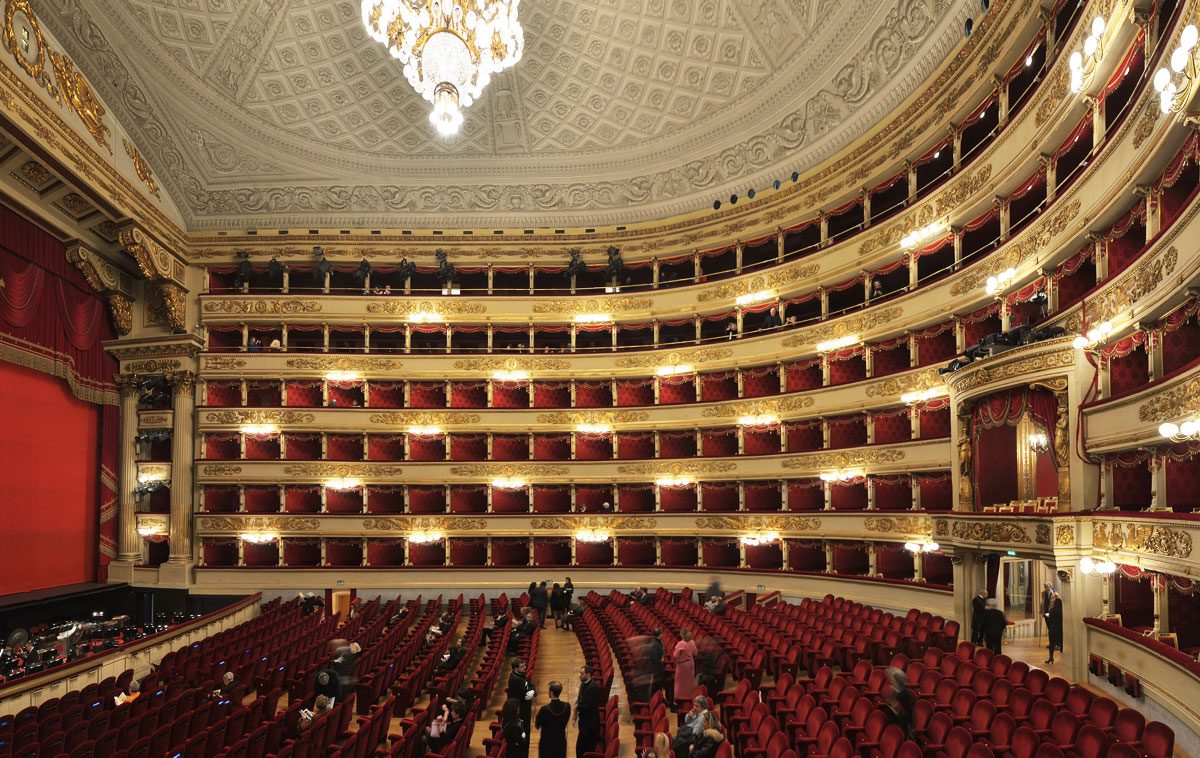
La Scala was destroyed by the same August 1943 raid that took the Palazzo Reale. The city rebuilt it inside three years. Arturo Toscanini, who had spent the war exiled in New York because he refused to conduct under fascism, returned to conduct the reopening.

Interior of Teatro alla Scala, Milan
Teatro alla Scala
Cat. no. 12

Teatro alla Scala

Bombed 15 August 1943. Reopened 11 May 1946.

The opening program ran four hours: Rossini, Verdi, Boito, Puccini. Tickets sold out within hours. Italian state radio broadcast it across the country.

A city that had been bombed flat held a long public ceremony of normal cultural seriousness. The reopening was a statement of how Milan intended to continue.

Visit the Museo Teatrale if a performance is not on. The point holds either way.

Teatro alla Scala · Piazza della Scala
Cultural repair, kept disciplined and ongoing.
A
Annex
Cat. 13–16 · Four further marks

Four further marks the city carries in plain sight. The wall Leonardo painted on, the platform under the main station, the parliament of the dead, and the answer the city is writing now.

Cenacolo, Santa Maria delle Grazie, the refectory wall
Il Cenacolo · Santa Maria delle Grazie
Cat. no. 13

The Refectory Wall
Santa Maria delle Grazie

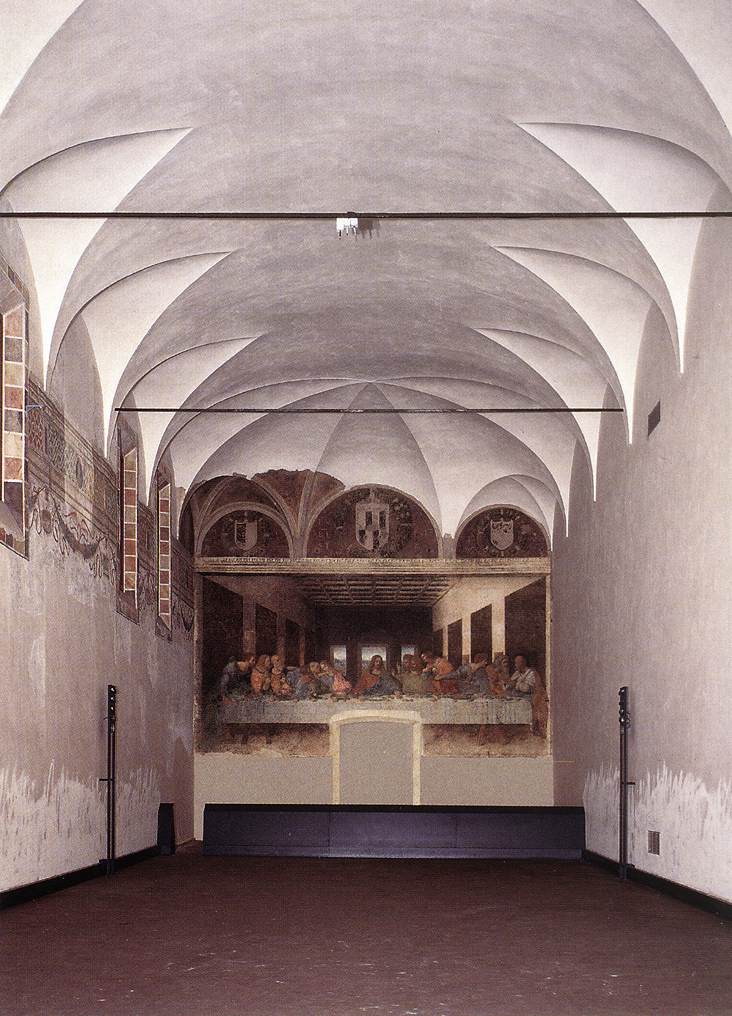
Cenacolo Vinciano. Refectory of the Dominican convent, finished 1498.

On the same August night in 1943 that took La Scala and the Palazzo Reale, the refectory of Santa Maria delle Grazie was hit. Three of the four walls and the roof collapsed. Leonardo's wall stood, sandbagged. It stood alone in the rubble for two years before the rest was rebuilt around it.

The painting was already five centuries into its slow disappearance. The night Milan refused to lose it is part of why it is still here.

Book months ahead. Fifteen minutes, twenty visitors at a time.
Santa Maria delle Grazie · Cenacolo Vinciano
Memoriale della Shoah, Milano
Muro dell'Indifferenza
Cat. no. 14

Memoriale della Shoah
Binario 21

Below Milano Centrale, Piazza Edmond J. Safra 1. Opened 2013. Architects Guido Morpurgo and Annalisa de Curtis.

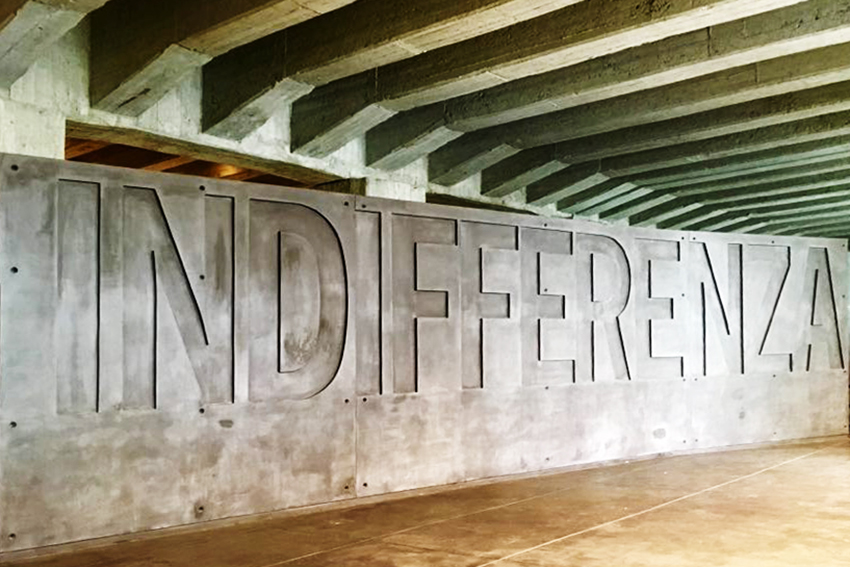
Between December 1943 and January 1945, freight cars on Platform 21 underneath Stazione Centrale were loaded with Jews and political prisoners bound for Auschwitz, Bergen-Belsen, and the Italian camps at Fossoli and Bolzano. The platform was hidden from the main station by design.

An original cattle car sits on the original track. Behind it the long wall carries one word in raised stone, chosen by the survivor Liliana Segre.

Indifferenza

The single word does the work that 137 chimes do at Piazza Fontana. It tells the visitor where the responsibility sits.

Allow an hour. Quiet shoes.
Memoriale della Shoah · Piazza Safra 1
Cimitero Monumentale, Milano
Famedio · Cimitero Monumentale
Cat. no. 15

Cimitero Monumentale

Piazzale Cimitero Monumentale. Opened 1866. Architect Carlo Maciachini.

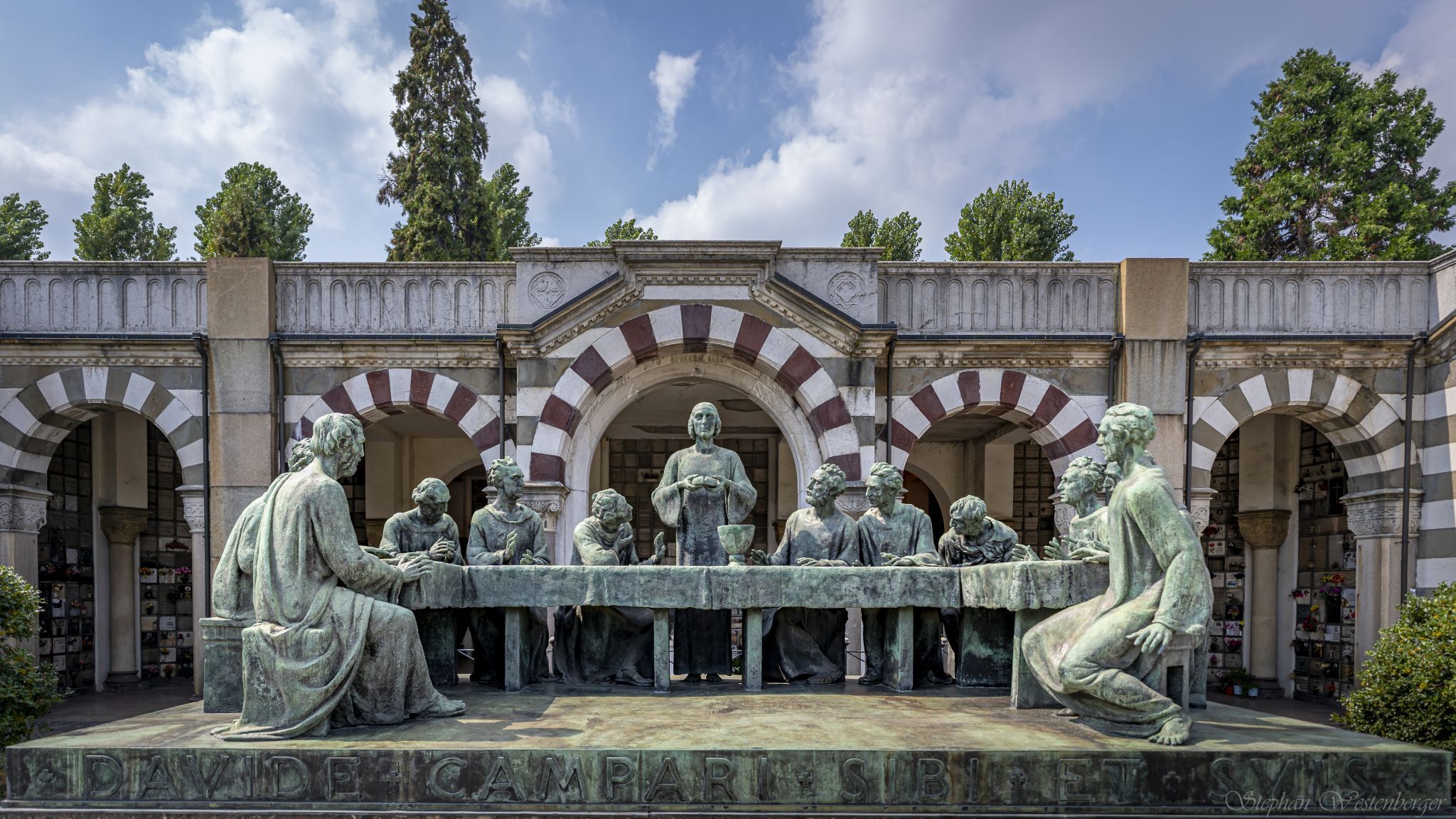
Opened as the single municipal cemetery for the unified city, built like a small parliament of the dead.

Manzoni rests in the Famedio just inside the entrance. Toscanini is one row over. Hoepli the bookseller, the Campari family, the Branca family, the Falck steelmakers, all here. A walking index of who built modern Milan.

Walk it like a sculpture park. The marble argues.

Tram 4 or Tram 12. Allow an hour.
Cimitero Monumentale · Piazzale Monumentale
Cat. no. 16

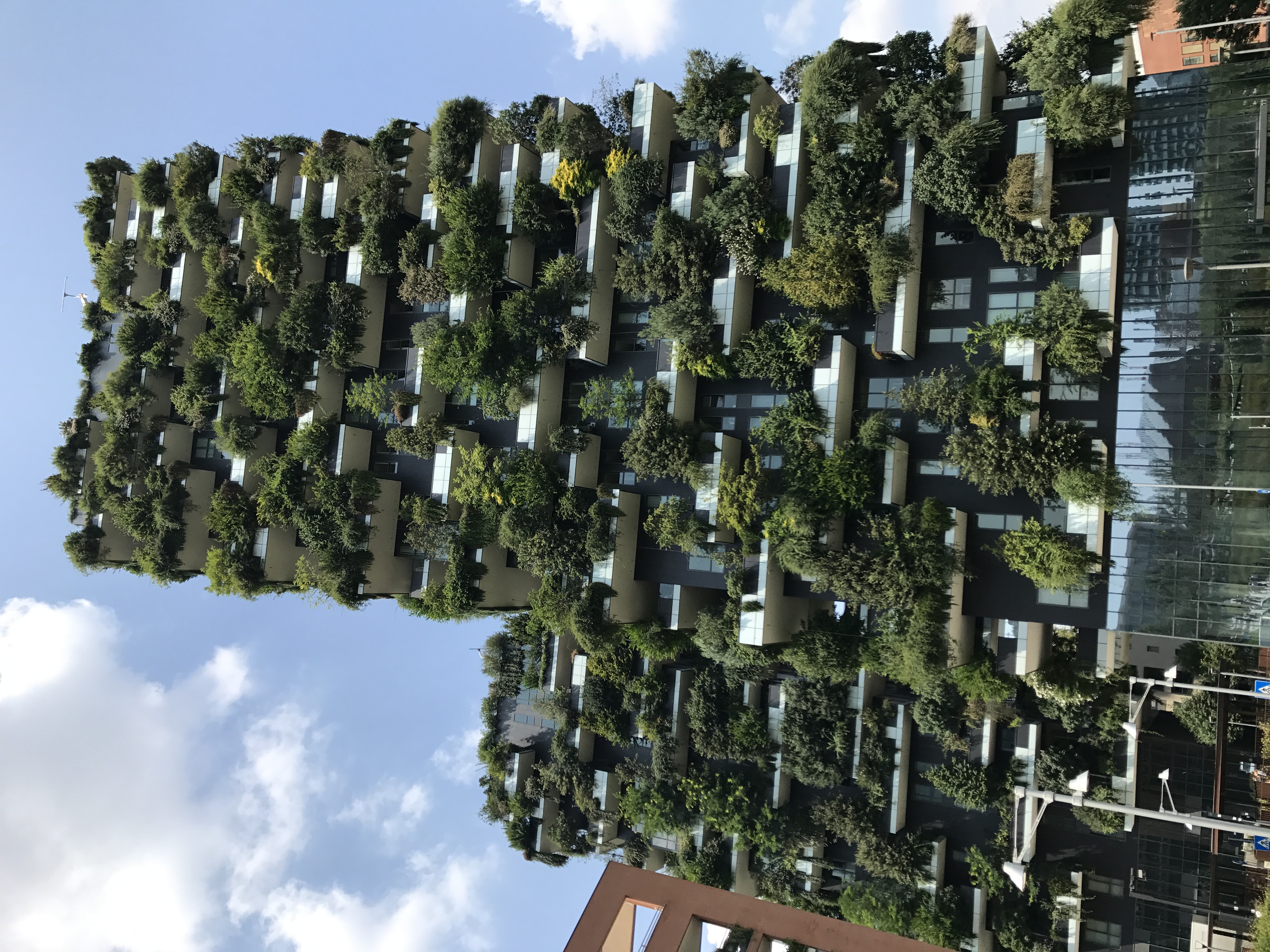
Bosco Verticale
The closing note

Stefano Boeri Architetti, completed 2014. Porta Nuova, on the line of the old city wall.

Two residential towers planted with eight hundred trees and twenty thousand smaller plants.

Milan industrialized faster than almost any Italian city and paid for it in air quality. The towers are a public answer to that ledger.

The same answer that rebuilt La Scala and saved the Cenacolo wall. The city does its repair in public, on the skyline.

Walk past in the evening. Look up.
Bosco Verticale · Porta Nuova
Bosco Verticale, Milan
Bosco Verticale
Walking order · one or two days

A short itinerary,
in museum sequence

Buy the book. Walk the streets. Stand in the square. Visit the room. Hear the hall. Look up.

Catalog